mmmm

An interpretable human-centered voice cloning system for content creation that helps users understand, evaluate and shape their voice.
UW Master's Capstone · 2026
Contexts
Voice cloning uses AI to produce a synthetic copy of a person’s original voice. Yet the process remains a black box. Limited interpretability and control hinder users’ ability to achieve outputs that align with their intended voice
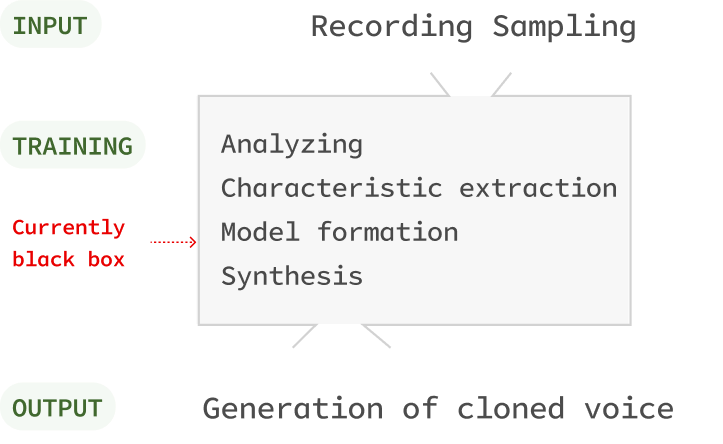
Research
To unpack the black box, we built an intentionally blank but fully functional voice cloning prototype. Our participants (n=7) walked us through what they were thinking and what they would change at each step—including voice input, model training, and voice output. We surfaced user motivations, pain points, and mental models of the system.
-
1. Users don’t know what the system needs from them.
They’re asked to record voice samples, but receive little guidance on what the system captures, what’s still missing, or whether their recordings are sufficient.
Interpretable voice capture
Our system makes recording transparent by showing what voice characteristics have been captured, what is missing, and whether the samples are sufficient to move forward.
-
2. Users struggle to interpret why the output feels wrong.
When a cloned voice doesn’t sound like them, they rely on intuition to evaluate it. Without shared vocabulary or structured evaluation, iteration becomes guesswork.
Structured voice evaluation
Before generating the final output, users can compare cloned versions side by side with their original recording, helping them identify which version best represents their voice.
-
3. The system doesn’t adapt to how people create.
Existing tools apply the same settings regardless of content type, leaving users to bridge the gap between what the system produces and what their content actually needs.
Content-type aware generation
The system adapts generation process to the user’s content context, such as podcasts, audiobooks, or voiceovers, reducing the gap between what the model produces and what the creator needs.



HOW IT TURNS OUT
Beyond Design
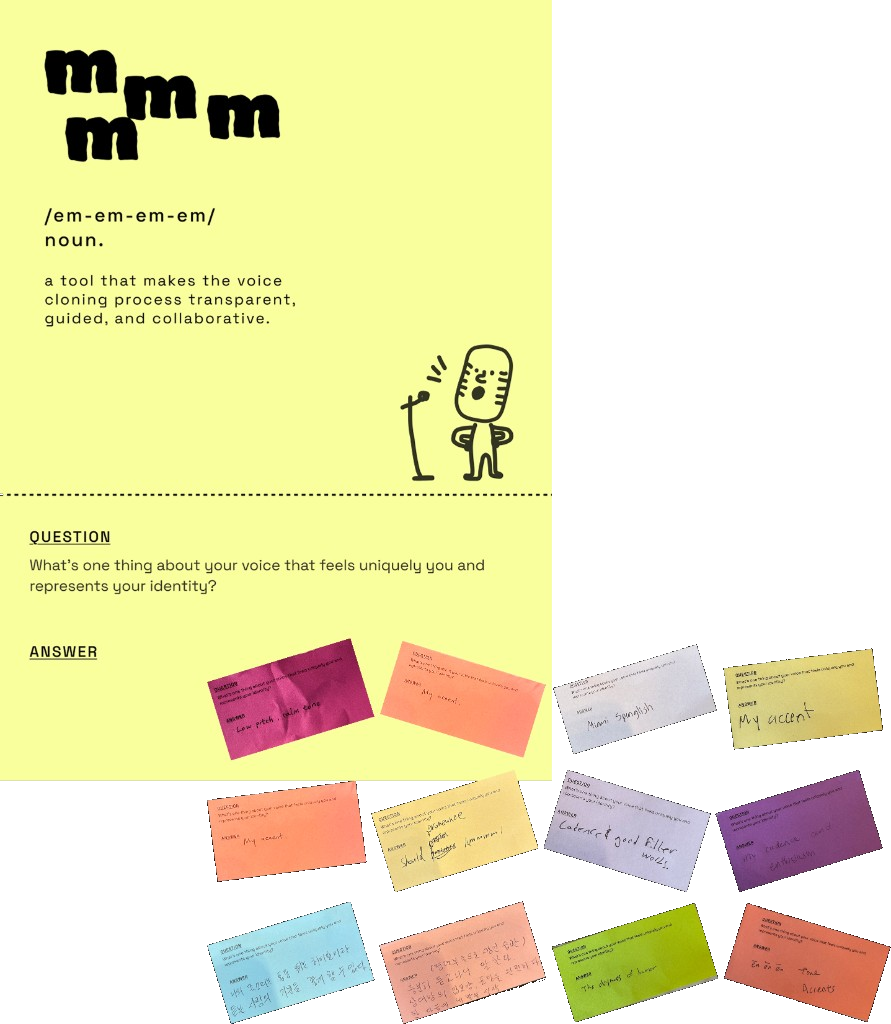
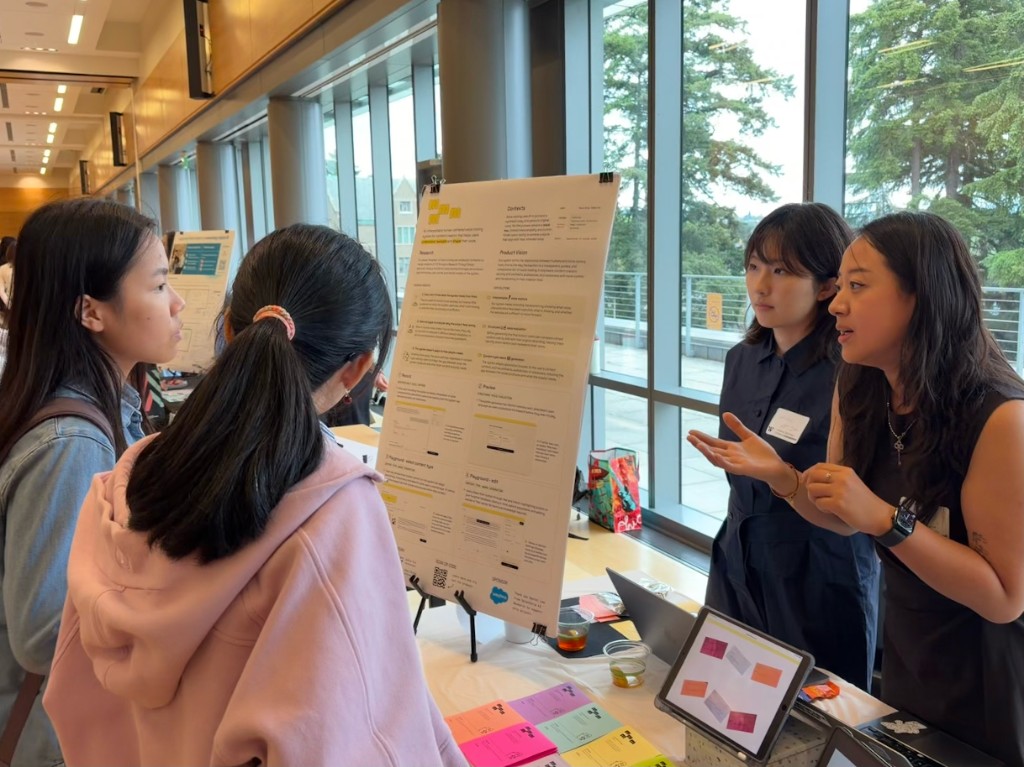
While this piece of technology being so approachable, we raised a critical and discursive question to our audience at the capstone showcase. By drawing a connection between voice and identity, we invited our audience to sit with the ethical weight of this technology rather than just marvel at its capability.
What’s one thing about your voice that feels uniquely you and represents your identity?
We collected their responses and showed them on our website: mmmm.figma.site
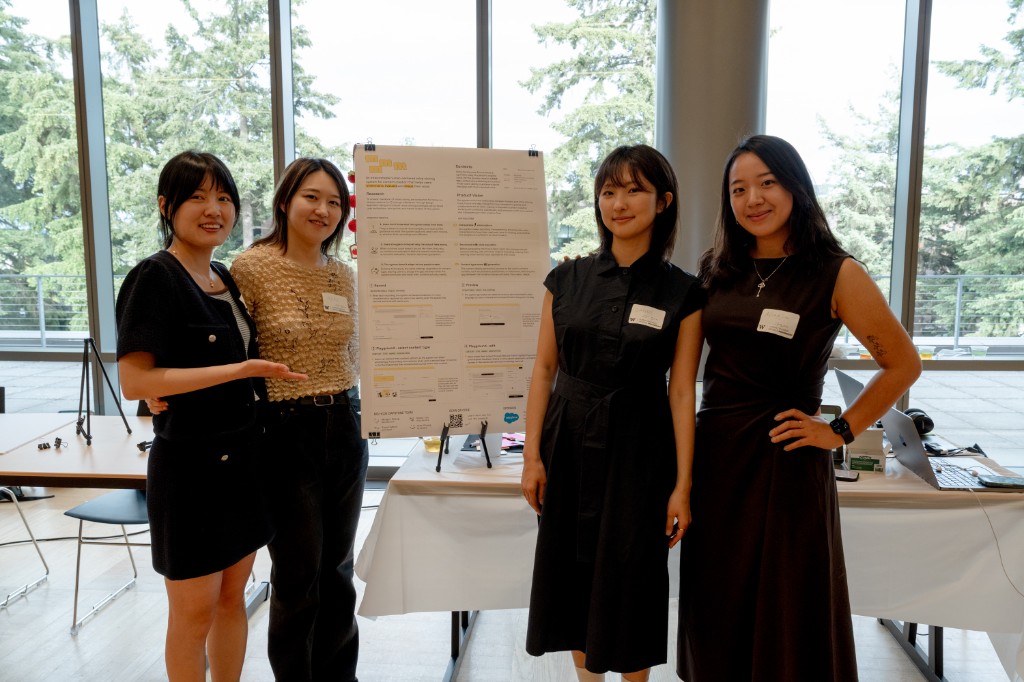
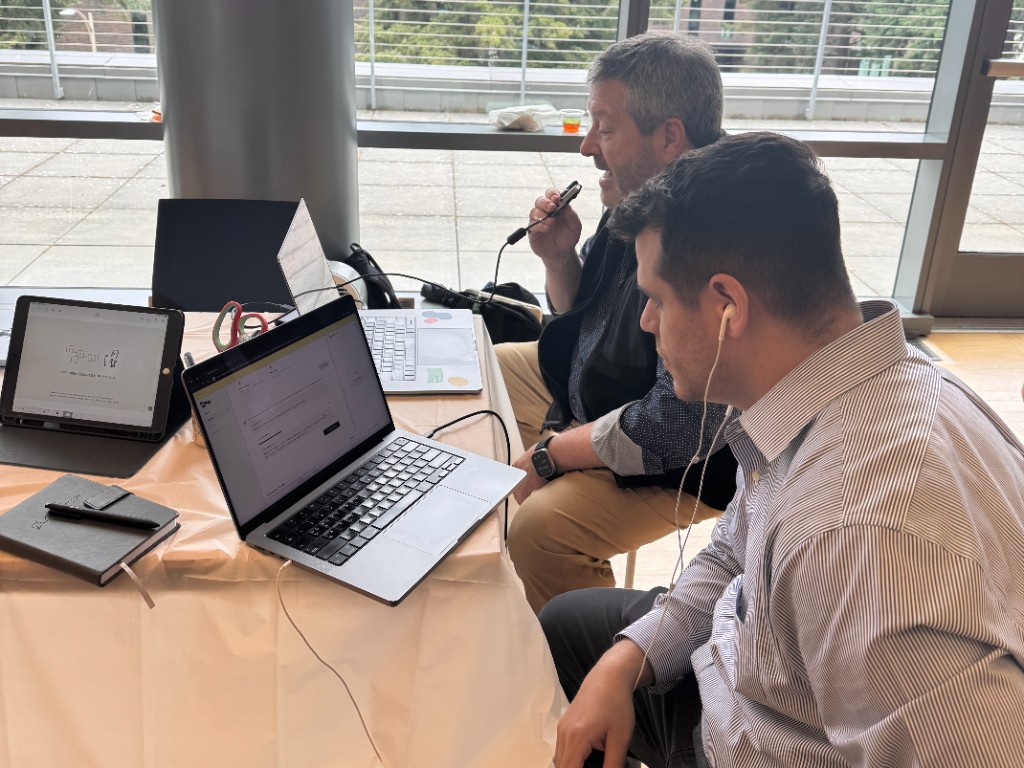
(Huge shoutouts to my best teammates Gahui Yun, Alex Chung, Soyun Moon <3)
Reflections
Human-centered AI in practice
Our capstone project tackled a genuinely emerging design problem in the age of AI: how do you make something feel human-centered rather than just technically functional? The contribution to human-centered design isn’t just a better UI, but surfacing voice cloning has a trust, control, and transparency problem. Users didn’t understand what was happening inside the system, felt anxious about whether they’d given “enough” samples, and couldn’t predict what their output would sound like. Bringing that lived experience into focus, through co-design, is exactly what HCD is for.
Leading through ambiguity
I grew enormously in my leadership through this project, especially in how I handle ambiguity. When the product felt too generic and open-ended, I started treating the ambiguity itself as fuel. Some of our best pivots came from half-formed opinions I put on the table—not because they were fully polished, but because they gave the team something to push against. I learned that leadership isn’t always about having the right answer. It’s about being willing to move first so others can move with you.